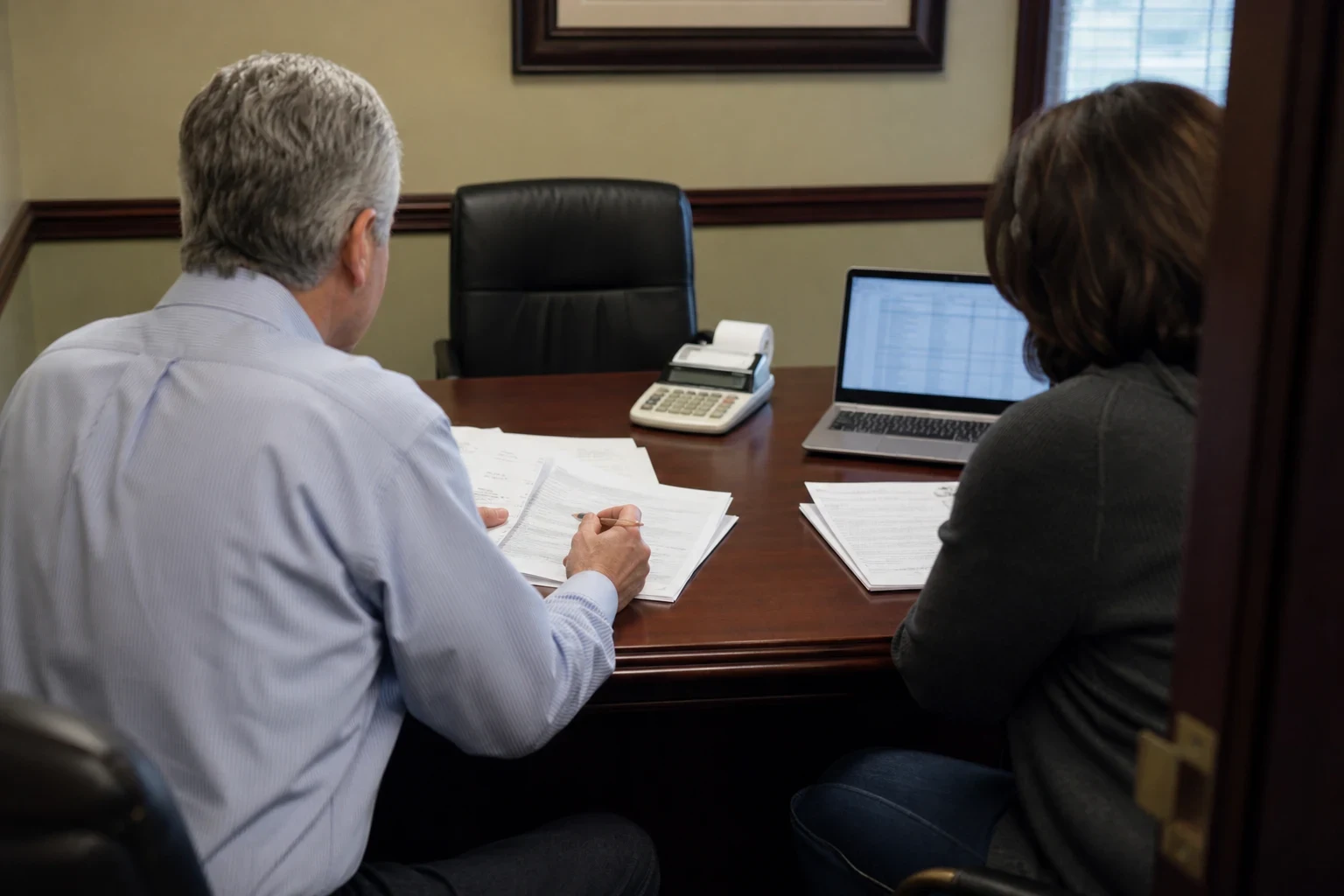
ServicesTax Management
Tax Management in Middletown, NJ
Taxes quietly take a share of every paycheck, dividend and retirement withdrawal. We help you plan where to hold investments, when to sell and how to draw income, so fewer dollars leave your portfolio than need to. We work alongside your CPA, never around them.
Planning for taxes before they happen
Most people think about taxes once a year, when the return is due. By then the decisions that drove the bill are already made. Tax management moves that thinking earlier: which account a fund belongs in, whether a sale should wait until January, how much to convert or withdraw in a given year.
We are careful by habit. We would rather show you a slower, well-documented move than a clever one that invites trouble later. Every recommendation comes with the reasoning written out, so you and your tax preparer can check it.
We are Series 66 and SIE licensed, which means we can advise on the investment side of these decisions. We are not your tax preparer, and we will tell you plainly when a question belongs with your CPA or an attorney.
What our tax management work covers
- Account location review
- We look at what you hold in taxable, tax-deferred and Roth accounts. Income-heavy holdings often belong in sheltered accounts, while long-term growth positions can sit in taxable ones.
- Gains and loss harvesting
- Before you sell, we check the cost basis and holding period. When markets dip, we look for losses that can offset gains, while watching wash-sale rules.
- Retirement withdrawal order
- We map which accounts to draw from first and how much, year by year. The goal is to avoid pushing yourself into a higher bracket or raising Medicare premiums by accident.
- Roth conversion analysis
- We model whether converting part of a traditional IRA makes sense in lower-income years, and how much is enough before the tax cost outweighs the benefit.
- Coordination with your CPA
- With your permission, we share our notes and numbers with your tax preparer before year end, so nothing in your portfolio surprises them in April.
- Insurance as part of the picture
- We also offer life insurance, and we can explain how certain policies are taxed. We only bring it up when it fits your goals.
Signs it is time to plan around taxes
Your tax bill keeps surprising you
If April brings a bill you did not expect, something in your accounts is likely generating income you are not tracking.
You are a few years from retirement
The years between leaving work and claiming Social Security can be a valuable window for conversions and planned withdrawals.
Your mutual funds pay out big distributions
Funds held in taxable accounts can hand you capital gains even when you never sold a share.
You hold a concentrated stock position
Company stock or one large holding with a low basis needs a careful, staged plan to reduce risk without a single large tax hit.
You sold a business or received an inheritance
A sudden lump sum changes your bracket and your choices. It pays to slow down and plan before moving it.
How we work through it with you
- 1
Introductory meeting
We start with a conversation at our office or by phone or video. You tell us your goals and concerns, and we explain how we work and what we would need to see.
- 2
Gathering your documents
We review recent tax returns, account statements and cost basis records. We only ask for what is needed and explain why we need it.
- 3
Written findings
You get a plain summary of what we found, which moves we suggest and the trade-offs of each. Nothing is changed in your accounts without your sign-off.
- 4
Year-round check-ins
Tax opportunities show up through the year, not just in December. We revisit your plan when markets move, your income changes or tax rules shift.

What affects the cost of tax management
Our fees depend on how much work your situation involves, and we explain them clearly in the introductory meeting before you commit to anything. You will know how we are paid and what is included.
- Number and type of accounts
- A single IRA is simpler than a mix of brokerage accounts, workplace plans, Roth IRAs and trusts.
- Complexity of your income
- Business income, rental property, stock options or a pension all add steps to the analysis.
- Ongoing or one-time work
- A single Roth conversion review takes less time than year-round monitoring tied to an investment management relationship.
- Coordination with other professionals
- Working closely with your CPA or estate attorney adds meetings and review time, and usually leads to a better result.
Tax management questions we hear
Something not covered here? (732) 655-2271
Do you prepare and file tax returns?
No. We focus on the investment and retirement decisions that shape your taxes. Your CPA or tax preparer files the return, and we are happy to work with the one you already trust.
Is tax-loss harvesting worth it for a smaller portfolio?
Often it is, if you have taxable accounts with gains to offset. Losses can also offset a limited amount of ordinary income each year and carry forward. We will tell you honestly if the benefit in your case is too small to bother.
Should I convert my traditional IRA to a Roth?
It depends on your current bracket, your expected bracket later and how you will pay the tax on the conversion. Partial conversions over several years are often safer than one large one. We model the numbers before suggesting anything.
Do New Jersey taxes change your advice?
Yes. New Jersey has its own income tax rules, and they do not always match federal treatment of retirement income. We factor state taxes into withdrawal and conversion plans and flag questions for your CPA.
How does this fit with my other planning?
Tax management works best as part of a broader financial plan. It connects closely with our retirement planning, investment management and legacy planning work, and we keep all of it pointed at the same goals.

Keep more of what you have built
Bring your last tax return and a recent statement to an introductory meeting. We will walk through where taxes are costing you and what careful steps could help.